Learn what to expect when visiting the Emergency Department. Learn More

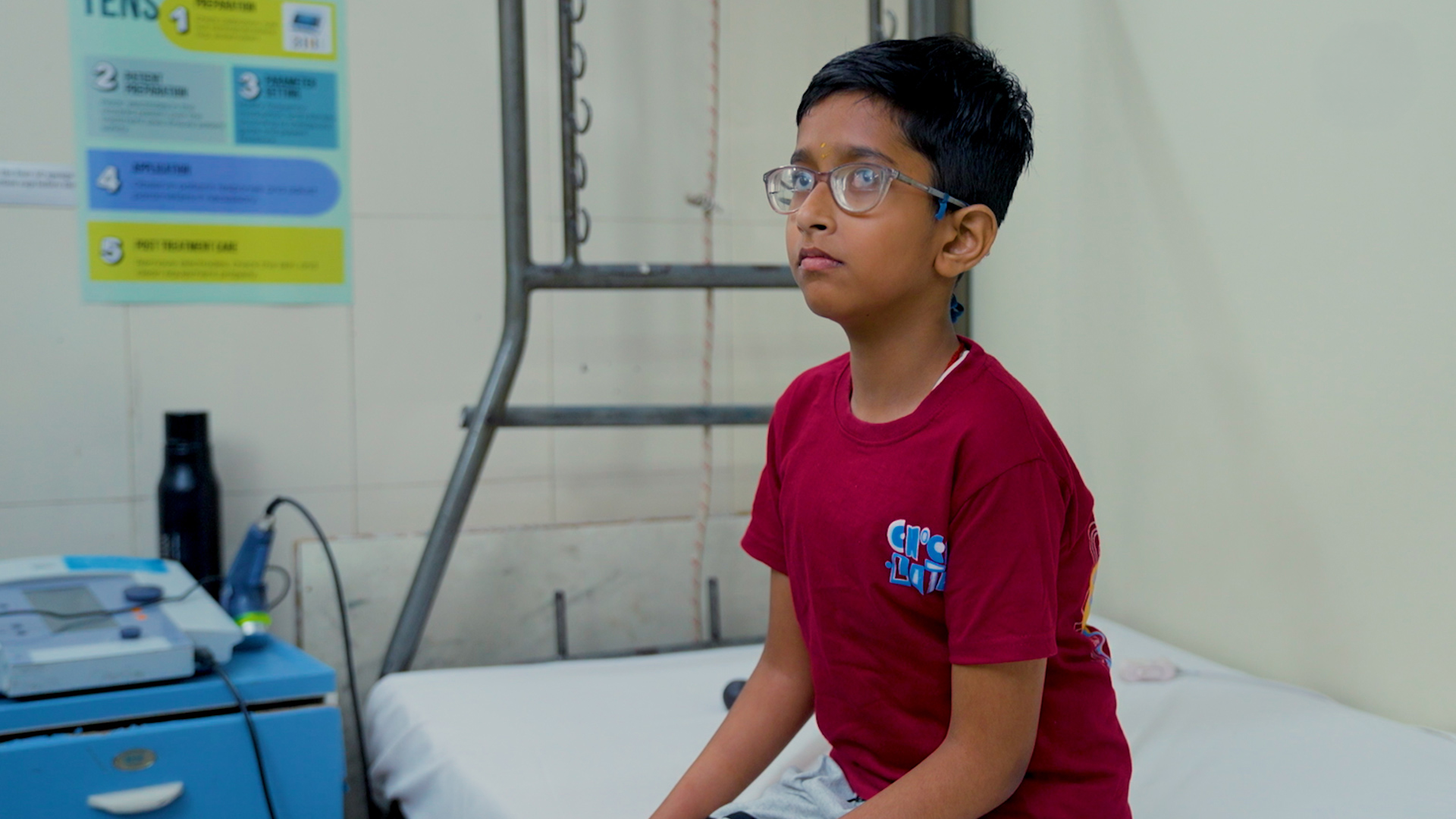
For 13-year-old Daksh , the world doesn’t come with the usual signposts. Living with cerebral palsy and spastic diplegia, and without hearing or speech, he relies on routine and trust to feel safe and communication, for him, is never simple. His family already had a relationship with St. Stephen’s; his parents had brought him here once before, and he had been under the care of the hospital’s orthopedic department. It was this same department that recommended and performed the surgery on his hamstrings, before referring him onward to physiotherapy to begin his rehabilitation.
The surgery had released his bilateral hamstrings – the muscles that had been pulling his knees into a constant, painful bend and making it hard for him to walk normally. After the procedure, his legs were kept in plaster for more than two months. And his family chose to continue his care at St. Stephen’s for physiotherapy too, rather than go elsewhere.
It turned out to be a critical decision. When the cast came off, his knee had no range of motion left at all – zero degrees of flexion. Unable to hear or speak, and without an easy way to understand what was happening to him, Daksh was frightened and resistant, wary of the therapist and unwilling to cooperate at first.
Progress came slowly, through daily sessions and a lot of patient coaxing. The team worked to mobilise his stiff knee and joints while rebuilding the muscle power the months in plaster had taken away and just as importantly, worked to earn Daksh’s trust, since words weren’t an option.
Within about three weeks of daily physiotherapy, the change was striking: his knee flexion went from zero to nearly 90 degrees, his muscle strength improved, and he began to cooperate and understand what was being asked of him. The team also took time to train his family in the home exercises and rehab routines that would keep his progress going outside the hospital.
For his mother, the difference was clear. “Before this, my son and I used to go for physio somewhere else for a long time,” she says. “I never got such a good response, and neither did my son ever respond like he has here. Before this, he wasn’t able to do so many things. Now he’s able to do so much exercise at home, after doing it here.”
Daksh still navigates the world his own way. But three weeks of patient care gave him back a knee that bends and a little more trust in the people trying to help him.
We use cookies to improve your experience on our site. By using our site, you consent to cookies.
Manage your cookie preferences below:
Essential cookies enable basic functions and are necessary for the proper function of the website.