Learn what to expect when visiting the Emergency Department. Learn More

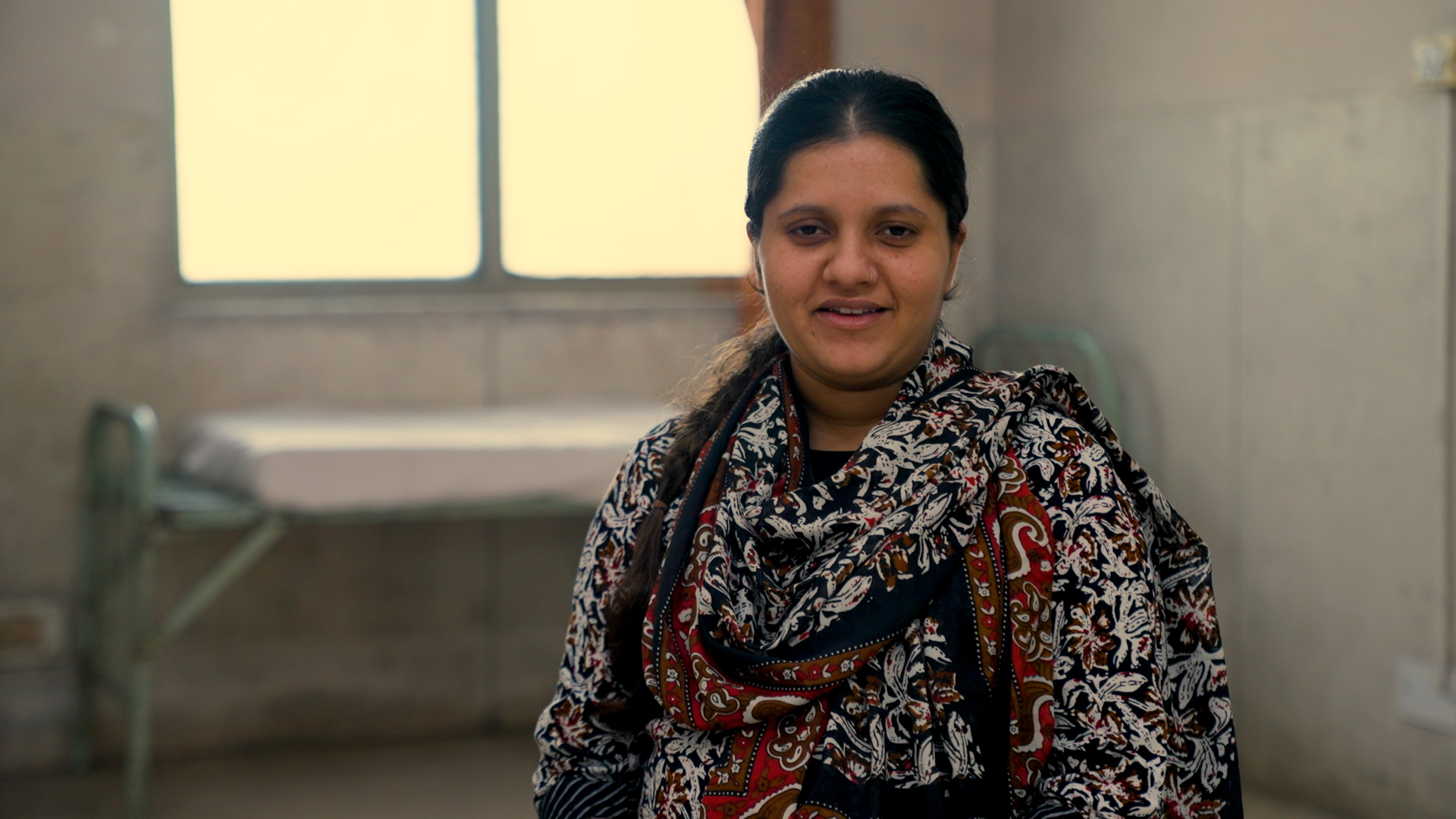
For Aisha, the journey to motherhood began in her home of Fatehpur, near Allahabad, shadowed by a quiet, aching longing. She wanted nothing more than to start a family, but month after month, her hopes were met with silence. When local doctors found themselves unable to unlock the mystery of her infertility, they advised her for further treatment in Delhi. Bearing the heavy weight of her unanswered prayers, she traveled straight to the doors of St. Stephen’s Hospital.
It was here that Dr. Prassan Vij looked past her symptoms to uncover the root of her pain: Aisha possessed a bicornuate uterus – a rare, “two-headed” womb split into two separate chambers rather than forming a single, welcoming home for a child.
The path forward was grueling. In 2023, she bravely underwent a series of intricate procedures, including a septal resection, laparoscopy, and hysteroscopy. Yet, her body resisted; painful complications arose, forcing her to undergo a D&C. Exhausted and seeking comfort, she returned home to Allahabad to heal, but the relief she so desperately sought never came. For ten long months, she lived in a state of suspended sorrow. Realizing her dream was slipping away, she turned back to the only place that felt like safe harbor: St. Stephen’s.
The traditional medical response to a bicornuate uterus is daunting: a massive, highly invasive reconstructive surgery to carve the two chambers into one normal cavity.
“Most patients undergo surgery for it,” Dr. Prassan Vij explains. “But it is a very extensive, very long surgery.” Even worse, the procedure can leave the walls of the uterus severely weakened, leaving it unable to stretch and protect a growing life. Rather than subjecting Aisha’s already exhausted body to the trauma of a major operation, Dr. Prassan Vij chose a path of profound medical wisdom – choosing to do the right thing at the absolute right time. He chose to heal her gently, with targeted medicine, allowing her body to conceive naturally.
When the miracle finally happened and Aisha became pregnant, the care team stood as guardians over the fragile new life. To protect the baby, they performed a beautifully simple, circular procedure – placing a delicate cervical stitch. As Dr. Prassan Vij describes it, it is an act as gentle as “tying a small thread on the uterus,” closing the path just enough to ensure the womb would not open too early.
The thread held, and the darkness gave way to light.
At eight and a half months along, Aisha’s belly carries the vibrant, kicking proof of her transformation. The major, scarring surgery she so deeply feared was entirely bypassed, traded instead for the quiet rhythm of a natural pregnancy nearing its beautiful conclusion this July.
We use cookies to improve your experience on our site. By using our site, you consent to cookies.
Manage your cookie preferences below:
Essential cookies enable basic functions and are necessary for the proper function of the website.