Learn what to expect when visiting the Emergency Department. Learn More

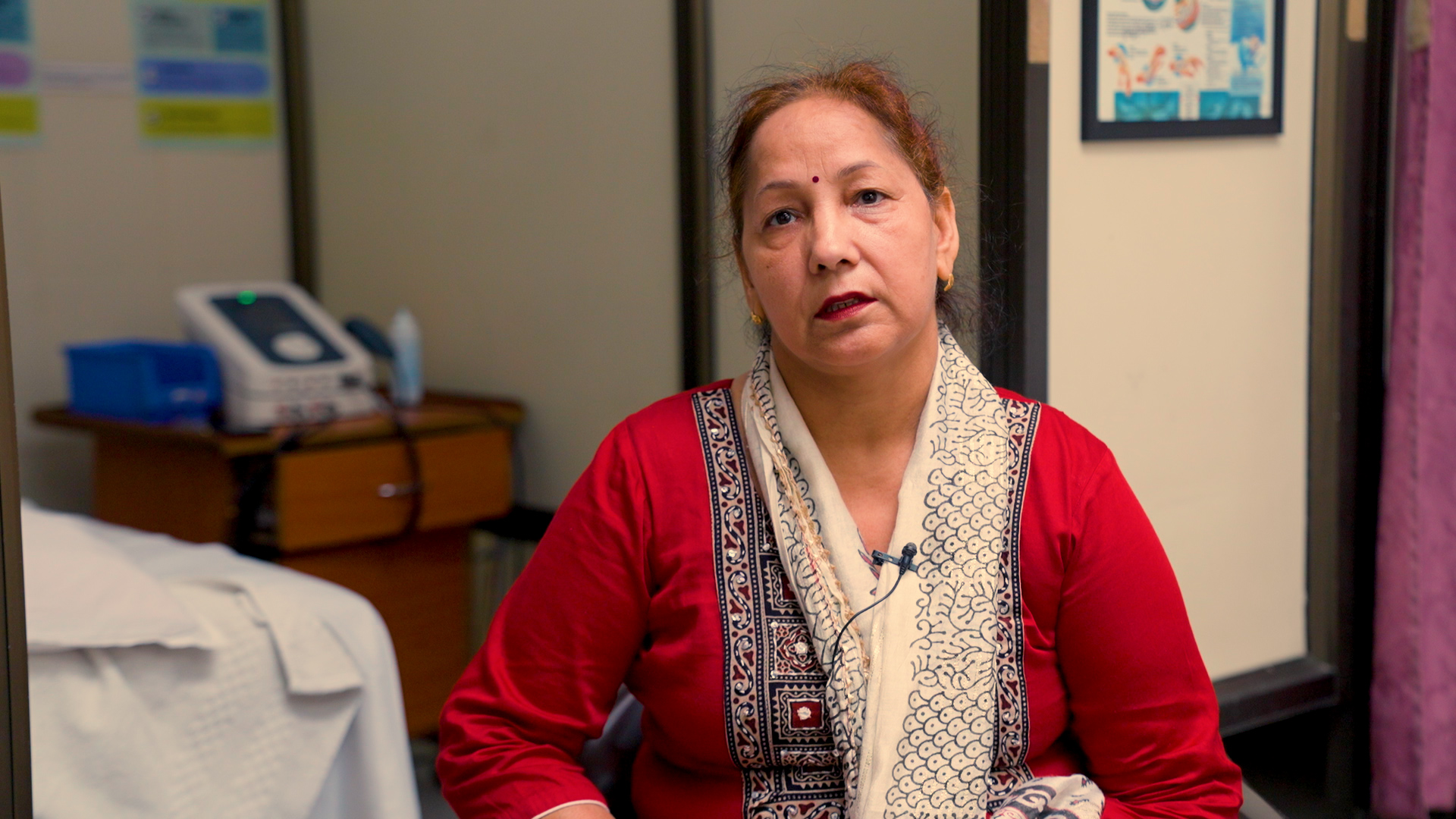
For eight or nine years, Rakesh Kumari lived inside a pain that never let go. It crept into every part of her day, until even the simplest comforts – sitting in a chair, lying down to rest became something to dread. “It was getting worse and worse,” she recalls. “I was not able to sit or lay down.”
When she came to St. Stephen’s, the scans told a familiar story: spondylolisthesis, a condition where one vertebra slips forward over the one beneath it, twisting and straining the spinal cord. It was the kind of diagnosis that, on paper, explained everything. But her care team looked closer and found that the slipped vertebra was not actually the source of her suffering.
The real cause was something quieter, and easier to miss: a severe sacroiliac joint dysfunction, a breakdown in the joints linking her spine to her pelvis. It was this, not the spondylolisthesis everyone assumed was to blame, that had left her unable to move freely and robbed her of her independence for years.
With the true cause finally identified, her treatment took a different shape not focusing on the spine alone, but rebuilding the body around it. Her care team focused on core strengthening, trunk stability, and restoring mobility through the spinal joints, addressing the sacroiliac dysfunction that had been driving her pain all along.
The results came steadily, and then dramatically. Some 80 to 90 percent of her pain has lifted. Where she once could not sit or lie down without suffering, Rakesh Kumari now moves through her daily life with ease walking freely, going about her routine, and reclaiming a quality of life that nine years of pain had slowly taken from her.
We use cookies to improve your experience on our site. By using our site, you consent to cookies.
Manage your cookie preferences below:
Essential cookies enable basic functions and are necessary for the proper function of the website.