
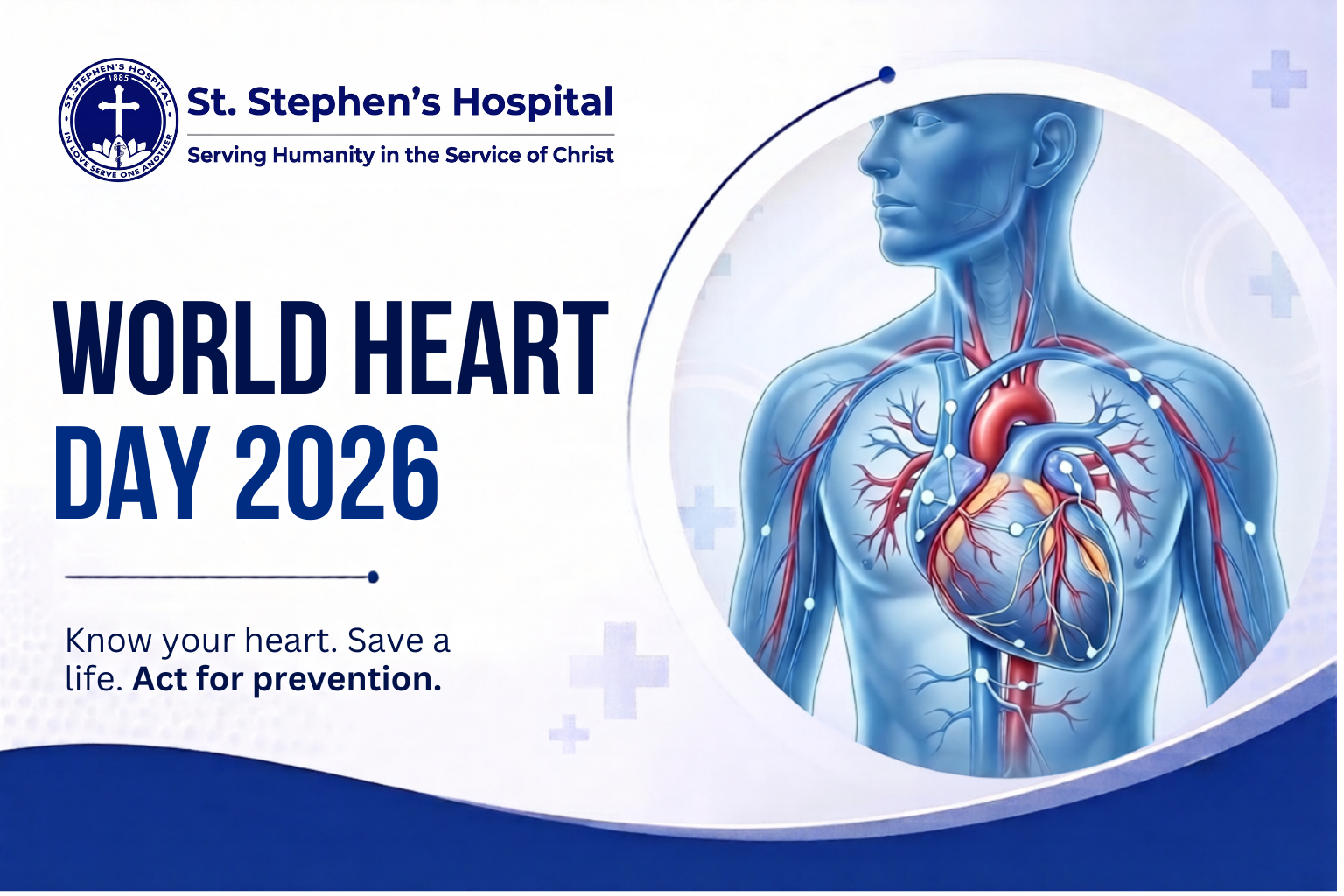
This World Heart Day, on September 29, 2026, it is time to address one of the most common medical misconceptions: confusing a heart attack with a cardiac arrest. While both are life-threatening cardiac emergencies, they are mechanically very different.
To help you understand your heart better, Dr. Gautam Sharma, Senior Consultant in the Department of Cardiology at St. Stephen’s Hospital, breaks down the definitions, warning signs, and preventive steps you must know.
The Big Difference: Circulation vs. Electricity
The simplest way to understand the difference is to view a heart attack as a “plumbing” or circulatory problem, and a cardiac arrest as an “electrical” problem.
Here is exactly how they differ:
| Feature | Heart Attack | Cardiac Arrest |
| The Core Problem | A circulatory problem where blood vessels narrowing slowly become abruptly blocked. | An acute electrical problem where the heart’s electrical supply mismatches and stops. |
| What Happens to the Heart | The heart is deprived of oxygen and blood supply, and a part of the heart muscle begins to take damage. The heart usually keeps beating. | There is an abrupt cessation of the heart’s pumping activity; the heart suddenly stops beating. |
| Patient Status | The patient is usually conscious and experiencing symptoms like chest pain. | The patient becomes unconscious instantly and has no pulse. |
| Immediate First Aid | Give anti-platelets and rush the patient to the hospital immediately (“time is muscle”). | An acute emergency requiring immediate CPR and the use of a defibrillator. |
Understanding a Heart Attack: Symptoms and Causes
The underlying chronic problem leading to a heart attack is Coronary Artery Disease (CAD). Over the years, fibro-fatty plaques slowly build up inside the blood vessels due to poor lifestyle, bad dietary habits, diabetes, hypertension, smoking, and stress. When this unstable plaque tears or disrupts, the body responds by forming a blood clot. This clot can completely (100%) block the artery, stopping blood supply to a part of the heart.
Because “time is muscle,” recognizing the symptoms early is crucial to restoring blood supply.
Typical Symptoms:
- Severe chest pain or a tight, pressure-like feeling over the heart.
- Radiating pain that travels to the jaw, back, or left arm.
Atypical Symptoms (Do Not Ignore These):
- Sudden dizziness, extreme fatigue, or heavy sweating.
- A burning sensation that is often mistaken for acidity or a simple gas problem.
Understanding Cardiac Arrest: The Silent Emergency
Unlike a heart attack, a cardiac arrest usually has no prior symptoms. Because it is a sudden electrical failure, there is a complete and abrupt stop of the heart’s activity. The person will suddenly collapse, lose consciousness, and have no pulse. Immediate CPR and defibrillation are the only ways to restore the rhythm.
The Gym Phenomenon: Why Young People Collapse
Recently, there has been an alarming rise in young people collapsing suddenly during gym workouts or vigorous physical activity.
Why does this happen? Strenuous physical activity can put immense stress on the heart. If a person unknowingly has unstable fibro-fatty plaques building up in their arteries, the sheer strain of heavy exercise can cause these plaques to tear. This instantly leads to a 100% occlusion (blockage) of the blood vessel, triggering a massive heart attack or collapse.
The Golden Rule: Never assume your heart is perfectly healthy just because you are young. Always get a preventive heart checkup and actively monitor your blood tests before starting any vigorous or strenuous physical activity.
6 Tips for a Healthier Heart
Your heart works 24×7 for you; you must reciprocate the effort by taking care of it. Protect your heart by adopting these lifestyle changes:
- Quit smoking completely.
- Avoid a sedentary routine and lead an active lifestyle.
- Manage and reduce your daily stress levels.
- Cut down on fatty, fried, and salty foods.
- Control underlying issues like diabetes and hypertension.
- Regularly test your lipid profile and undergo basic preventive tests, especially if you are at high risk.
Check Your Heart’s Health at St. Stephen’s Hospital
This World Heart Day, take a proactive step toward a longer, healthier life. If you experience any of the symptoms mentioned above or simply want to know the true status of your heart before hitting the gym, we are here to help.
The Department of Cardiology at St. Stephen’s Hospital is fully equipped with both invasive and non-invasive diagnostic tests to cater to all your preventive health checkup needs.