Lung cancer is one of the most widely discussed yet misunderstood health conditions today. Navigating a potential diagnosis or supporting a loved one requires accurate, medically backed facts rather than fear.
The information and clinical guidance below are drawn directly from insights shared by Dr. Mohammad Shamim Akhtar, Head of the Department of Respiratory Medicine at St. Stephen’s Hospital, Delhi.
Understanding Lung Cancer: How Cancer Develops
To understand lung cancer, it helps to start with how the human body functions at a cellular level. The basic structural unit of the human body is the cell. Cells divide in a controlled sequence to form tissues, which in turn form our organs. Normally, this process operates under strict check-and-balance mechanisms regulated by the immune system.
Cancer occurs when this normal cell division becomes dysregulated, unregulated, and uncontrolled.
- Tumor Formation: Uncontrolled cell multiplication causes cells to accumulate into a mass, known as a tumor.
- Mechanism Failure: If the body’s natural defense mechanisms such as cellular recycling or autophagy fail to clear or reject these abnormal cells, the mass develops into cancer.
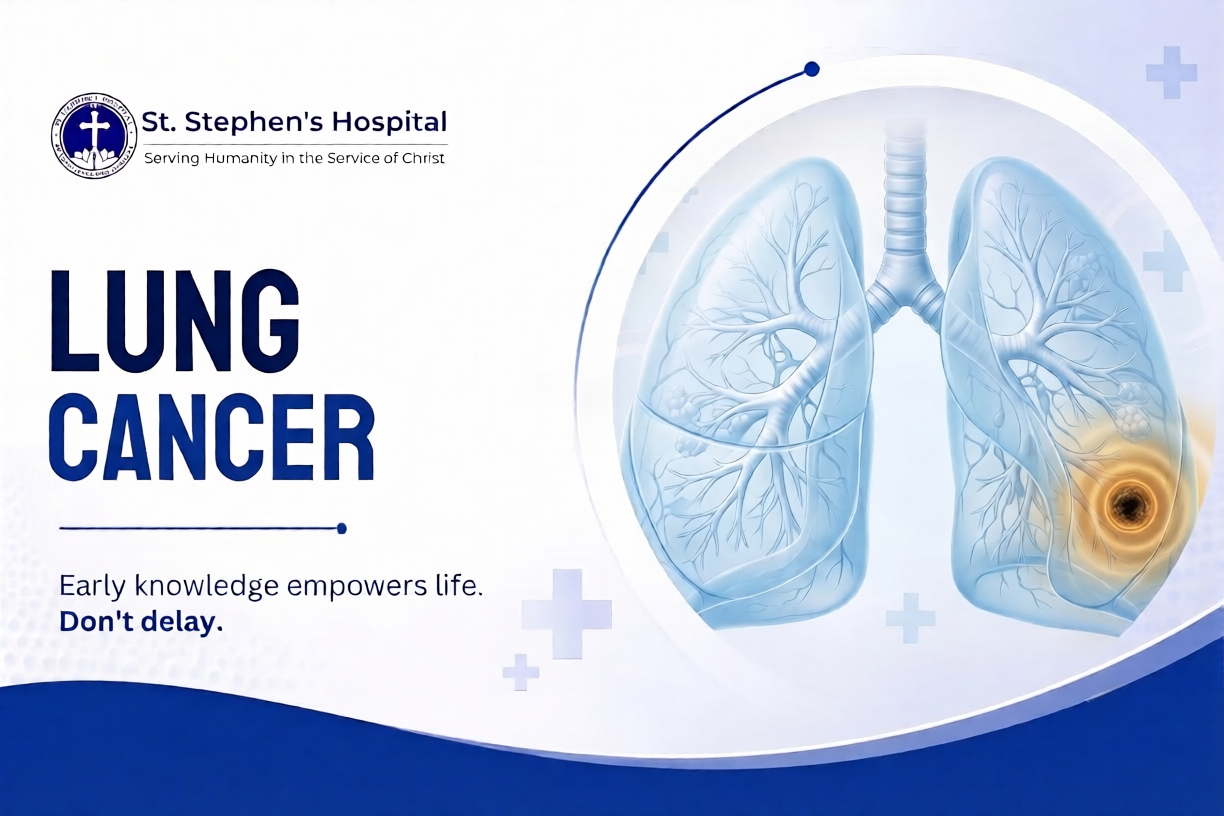
- Lung Cancer: When this unregulated cellular growth originates within the lungs, it is clinically classified as lung cancer.
Debunking Misconceptions: Lung Cancer is Not Contagious
There are numerous myths surrounding lung cancer. One of the most harmful misconceptions is the belief that lung cancer is a contagious disease (sometimes referred to locally as a “choot ki bimari”) that can spread from person to person.
Clinical Fact: Lung cancer is not contagious under any circumstances. You cannot catch lung cancer by living with, caring for, or being near a patient.
Isolating a patient out of fear of transmission causes unnecessary psychological distress. Lung cancer patients require empathy, compassion, emotional stability, and active family support throughout their treatment journey.
The Two Main Types of Lung Cancer
Before discussing causes and treatments, it is important to know that lung cancer is broadly divided into two primary categories:
- Non-Small Cell Lung Cancer (NSCLC)
- Small Cell Lung Cancer (SCLC)
Understanding the distinction is vital because the therapeutic approach, medication choices, and clinical strategies for these two types are vastly different. Your treating specialist determines the exact type through diagnostic testing to tailor the appropriate treatment plan.
Uncovering the Causes: Beyond Smoking
While tobacco smoking is universally recognized as the most common risk factor, smoking is not the sole cause of lung cancer. Non-smokers can also develop the disease.
Key Causes & Risk Factors:
- Tobacco Smoking: The leading and most critical modifiable risk factor. Quitting smoking significantly lowers your risk of developing cancer and other respiratory diseases.
- Genetic Mutations: Changes or abnormalities in cellular genes (the basic units that define body traits) can trigger dysregulated cell growth.
- Environmental Pollution: High levels of urban air pollution, dust, and particulate matter commonly experienced in major metro cities like Delhi contribute to respiratory risks.
- Occupational Hazards: Long-term workplace exposure to specific minerals like asbestos or heavy industrial gases (including carbon monoxide, carbon dioxide, sulfur dioxide, and nitrogen dioxide) can cause cellular damage in the lungs.
5 Critical Symptoms You Should Never Ignore
Lung cancer symptoms can sometimes be subtle or non-specific initially, but recognizing key warning signs early leads to faster intervention.
1. Chronic or Changing Cough
A persistent cough that lasts for weeks and fails to resolve with routine medications, or a sudden change in the character/sound of an existing chronic cough.
2. Unexplained Shortness of Breath
Experiencing sudden breathlessness or difficulty breathing without a prior diagnosis of asthma or Chronic Obstructive Pulmonary Disease (COPD).
3. Coughing Up Blood (Hemoptysis)
Coughing up blood or blood-tinged sputum, even in small amounts, is a critical symptom that requires immediate medical evaluation.
4. Unexplained Weight Loss
Rapid, unintended weight loss when you are not actively trying to lose weight or managing another known illness.
5. Hoarseness or Voice Changes
As a lung tumor grows, it can exert pressure on the nerves and respiratory structures in the central chest cavity (mediastinum), causing the voice to sound raspy, hollow, or strained.
The Diagnostic Journey: What to Expect
If you or a family member experience any of these symptoms, avoid self-diagnosis. A structured diagnostic evaluation involves clear, step-by-step clinical procedures:
Step 1: Initial Symptoms
⬇
Step 2: Chest X-Ray
⬇
Step 3: Contrast-Enhanced CT Scan
⬇
Step 4: Image-Guided Biopsy
⬇
Step 5: Staging (PET-CT/MRI)
1. Initial Screening (Chest X-Ray)
The first diagnostic tool is typically a routine chest X-ray, which provides preliminary imaging to check for abnormal spots, shadows, or lesions.
2. Contrast-Enhanced CT Scan
If the X-ray shows an anomaly, a Contrast-Enhanced CT Scan is performed. An intravenous contrast injection is administered during the scan, causing potential tumors to “light up” clearly for precise early detection.
3. Image-Guided Biopsy
To confirm whether a mass is malignant, a tissue sample (biopsy) is taken and sent to a pathologist. Modern image-guided biopsies (such as CT-guided biopsies) are safe, minimally invasive, virtually painless, and carry a very low risk of complications.
4. Cancer Staging (Stages 1 through 4)
Once a diagnosis is confirmed, doctors perform staging to evaluate the extent of the disease:
- Primary Site: The original location where the cancer started (e.g., the lungs).
- Secondary / Metastasis: Cancer that has spread from the primary organ to other body parts.
- Whole-Body PET-CT Scan or MRI: Scans the body from head to toe to accurately identify the stage (Stage 1, 2, 3, or 4) so the oncology team can select the proper treatment protocol.
Advanced Treatment Options: Hope Across All Stages
Significant advancements in cancer research over the past decade have transformed lung cancer management. A diagnosis even at an advanced stage does not mean you should lose hope.
>Treatments for Early-Stage Lung Cancer (Stages 1 & 2)
When detected early and confined to the lung tissue, tumors are often surgically resectable.
- Thoracoscopic Surgery: Modern, minimally invasive procedures (such as video-assisted thoracoscopic surgeries) allow surgeons to precisely remove the affected lung tissue with minimal recovery time and few complications.
>Treatments for Advanced-Stage Lung Cancer (Stages 3 & 4)
For advanced cases, targeted medical science offers effective treatment pathways:
- Targeted Therapy: Molecular testing identifies specific genetic mutations driving the cancer (such as EGFR or KRAS mutations). Specific targeted drugs can block these mutated genes directly, offering effective management with fewer side effects than traditional therapies.
- Immunotherapy: Cancer cells often evade the body’s immune system. Immunotherapy strengthens and re-arms your immune system, enabling it to recognize and eliminate cancer cells naturally.
- Radiation Therapy (Radiotherapy): High-energy rays are utilized to target and shrink tumors, helping control advanced disease and relieve localized symptoms.
4 Key Takeaways from the Specialist
- Quit Smoking Immediately: It remains the single most effective step in preventing lung cancer and preserving lung health.
- Listen to Your Body: Never ignore persistent respiratory symptoms or sudden changes in your health.
- Avoid Google Self-Diagnosis: Online searches lack personalized clinical correlation and often trigger unnecessary panic or “fear psychosis”. Always consult a specialist.
- Maintain Hope and Positivity: Advanced medicine offers options at every stage. Maintain an optimistic outlook, trust your medical team, and surround patients with care and encouragement.
Consult the Experts at St. Stephen’s Hospital
If you or a loved one are experiencing persistent respiratory symptoms or require an expert second opinion, early clinical evaluation is essential.
The Department of Respiratory Medicine at St. Stephen’s Hospital, Delhi, provides round-the-clock comprehensive care. Our state-of-the-art department is fully equipped with advanced diagnostic and treatment infrastructure, including:
- High-resolution Contrast-Enhanced CT Imaging
- Painless, image-guided biopsy procedures
- Advanced immunohistochemistry & molecular marker testing
- Integrated Pulmonology and Medical Oncology care
Take the first step toward proactive health management today.
👉 Book an Appointment with a Respiratory Specialist at St. Stephen’s Hospital
📞 Contact Us: Call 011-23966021-27 or visit us at Tis Hazari, Delhi.